WHAT’S IN YOUR BOWL?

Years ago now, back in the 90s, I had the privilege of serving on our local school board. It’s a seat I held for eight years. I learned a lot during those monthly meetings as well as volunteering one day a week in one of the junior high classrooms in order to be with students. Because of my personal involvement I was able to attend a student assembly where we listened and learned about canine units in police departments, specially trained dogs to sniff out drugs, bomb materials, etc. The fact I am able to recall that day all these years later is an indication of the impact new knowledge had on me. 

We–I–learned that these dogs are trained to root out one particular smell; they have the ability to ignore all other scents in their immediate surroundings. The example the trainer gave us was this…imagine making a batch of chocolate chip cookies. In the bowl you put the flour, butter, eggs, sugar, chocolate morsels. When the cookie is baked and we inhale their sweet aroma our noses are taking in the aroma from ALL the ingredients. To the dog, he is able to smell each individual ingredient….thus if he’s trained to sniff out marijuana he may walk right past another type of drug because that’s not his target. 

The trainer’s baking illustration has stuck with me, not only as information stored in my memories, but has also served now as an image of looking at life, especially for those of us living as Christ followers.  Jesus stated that …”I came that they might have life, and may have it abundantly”. (John 10:10)  Who is the “they” He’s talking about? It’s you and me.

There’s no argument that life is hard. Each one of us will suffer losses whether it’s a job, rejection from a school we applied for continuing education, the death of a loved one, losing all our assets or material possessions…loss takes on many definitions. Each loss–even joyful moments–go into “our bowl of life”. Each one is like flour. Alone, it has no flavor. It represents those bitter moments or circumstances of life. Sugar is sweet and is easily tolerated when tasting. Its sweetness reminds us of all the good things that happen for us. Raw eggs aren’t the most appetizing, but when mixed in with the dry ingredients, they bind them and create the right reaction for dough to stick together and rise under the oven’s heat. Our “bowl of life” holds the very abundance Jesus talked about as recorded by John. Notice He didn’t tell us our lives would be “perfect”. No, in the reality of this world He promised great “abundance”, that no matter what comes against us, He’s got us!

For myself, the end of March is hard for me. The days between March 21 and 24 are bittersweet. They are the dates my parents died, though years apart. Mom died on the 21st and we buried her on the 24th. The 24th was their wedding anniversary date. Dad died on the 24th. It seems God chose to end their stories on earth in a very tender way to show His compassion and plan. At least that’s how I’m choosing to see it. Within just a few weeks every year, Easter comes on the tails of their death dates, causing my emotions to combine sadness from still missing them to being layered with the joy of the Resurrection of Jesus. I’ve learned that rather than trying to dismiss the sorrowful emotions that creep in, to embrace them and stir in everything good, too, for I know that this is the reality of my life. I am able to allow moments of grief, yet remain joyful. This is abundance.

Next year at this time, I will most likely still experience brief moments of grief again when those March dates roll around. Easter 2027 will come and with great joy I’ll be able to reflect that on Easter weekend 2026 a young grandson became more confident on a two wheel bike with no training wheels and our youngest granddaughter, age 6, chose to be baptized in her church. 

I don’t know what your “bowl of life” is accumulating. What I do know is that when we allow Jesus to be the one guiding and providing for us in our lives, everything will be just fine. Living as Christ followers does not give us a perfect life by any description of the word. Following Him gives us a person to cry out our grief and applaud our mountain top experiences. He is able to take ALL the single, bitter, sweet, raw circumstances of life and create something good! 

WHEN EMPTINESS IS GOOD

Empty. 

Commonly defined as having nothing inside or on the surface, this is a concept everyone comprehends, even youngsters.

Finish a box of favorite candy. Empty Container.

Drink your favorite beverage. Empty container.

Enjoy a gourmet meal. Empty plate.

Drive your vehicle until it stalls to a complete stop. Empty tank.

These forms of emptiness evoke feelings of frustration, disappointment, anger, mostly negative emotions and very few positive thoughts (except for that gourmet meal perhaps!)

But what if there was something that became empty which brought forth every emotion equated to extreme happiness…with the right amount of fear mixed in to indicate awe and wonder? We don’t need to look very far to find that “something”. The answer lies in the resurrection of Christ some 2,000 years ago.

Each of the four gospels give an account of Jesus being crucified on a Roman cross and buried in a tomb which literally meant His body was laid inside a small opening within a rocky wall and sealed with a large stone to keep out animals and birds who would otherwise desire to dine on His flesh. Jesus’ body was prepared for burial using common Jewish practices and after the rock was rolled into place, hands that had touched him during preparation, tears falling down cheeks, feet that had traveled with Him during three years of ministry, walked away. Their hearts were broken, they were indeed very “empty”. Their beloved Rabbi was dead. How would life continue with Him gone? By now, the events of the last few days are still vibrant in their minds. Words from His mountainside and small village teachings echoed in their thoughts as they made their way home, their emptiness overshadowing previous months and days of joy, laughter, hope, long days and nights spent at His feet to hear new teachings, to absorb assurance that God had not forgotten them.

Not too long from the time of burial, in the dark, Mary Magdalene makes her way to the tomb. What has drawn her to this spot? Has she come in the dark to avoid potential harm or suspicion as to her reasons for a visit under the cloak of unlightened skies? Did the Roman guard who was appointed to stand watch outside the tomb see her? As I ponder the moment Jesus became resurrected, the power inside the sealed tomb that must have been an explosion bringing Him to life along with the miraculous moving aside of the rock that had sealed His resting place, was all it took to bring the guard to his knees or perhaps even knocked out temporarily. Whatever that supernatural moment looked like, the four gospels hold eye witness accounts and evidence for an “empty” tomb which gave us a risen Saviour. “THIS” is what we celebrate this weekend. “THIS” is an empty that gives us pause to honor, celebrate, shout for joy, and prove to a dark world that God is alive. And, like Mary Magdalene who ran to find Peter…to tell him what she had discovered…we, too, should continue taking the news and message of the empty tomb to our family, friends, communities, and the world.

I love what Paul wrote in the book of Romans whe n he said “The same spirit that raised Jesus from the dead lives in you…” Who is this spirit? It’s the spirit of the living God, the author and creator of life, the One Who has victory over death, who gives us eternal life by placing surrender and faith in our hearts because of what Christ offers through salvation.

Empty. Maybe this is how you’ve felt for a very long time. The good news is you don’t have to remain feeling drained and without hope. Come to the One who can satisfy your hunger and thirst to be filled. It’s never too late to begin embracing the emptiness of a 2,000 year old empty tomb, the very freedom from darkness of death to the light of life!

Happy “Resurrection Sunday”. Jesus Christ IS alive! Let us rejoice and be glad!

PALM SUNDAY’S HUMBLE ENTRY

Attend any wedding celebration and anticipation is consistent. Guests and family members are seated; the presiding minister and groom are in position in front of an altar or backdrop of an arch decorated with flowers and flowing bands of fine fabric. The music shifts from soft background melodies to something worthy of announcing the most important person at the wedding–the bride!

Guests rise to their feet as if on command. All heads turn to face the rear of pews or chairs to get a “first glimpse” of the bride as she makes her appearance at the top of the aisle, face veiled, arm intertwined with her escort, usually her father.. All preparations leading up to this day now pale in comparison to her arrival, for this is “her” day; she is the focus of attention in every aspect wedding celebrations offer.

This weekend Christians around the world celebrate Palm Sunday, the day marked as “Jesus’ triumphal entry into Jerusalem”. The prophet Zechariah recorded hundreds of years earlier this very moment when he wrote: “Rejoice with all your heart, daughter of Zion! Shout out loud, daughter of Jerusalem! Look! Your king is coming to you. He is righteous, and he is victorious. Yet he is humble–he’s riding on a donkey, yes, on a lowly colt.” The four gospels of Matthew, Mark, Luke and John all confirm Jesus’ entry into the holy city. Along with their witness material, they wrote about the people lining the road waving palm branches, paving the roadway with palms, hailing Jesus with shouts of joy and exaltation as their “king”. All eyes were on Jesus in those moments.

As the lenten season comes to an end for yet another year since Jesus’ entry into Jerusalem to face trial, public execution, in another week Christians will celebrate history’s most powerful event–resurrection of a sacrificed savior which changed and challenged every Jewish tradition, grafted in gentiles as part of God’s kingdom, established that kingdom on earth through his life and ministry. 

In New Testament writings there are many references to the “church” being referred to as the “bride of Christ”, making Christ the groom. In Revelation 19: 7 we read: “Let us rejoice and be glad! Let us give him the glory! For the time has come for the wedding of the Lamb, and his Bride has prepared herself–fine linen, bright and clean has been given her to wear.” When John wrote Revelation he described many future events that will happen, fulfilling yet more and more prophecies. Among those is the second coming of Christ, yet “another” triumphal entry. Revelation 19: 11  “Next I saw heaven opened, and there before me was a white horse. Sitting on it was the one called Faithful and True, and it is in righteousness that he passes judgement and goes to battle”. It’s in this very moment of Jesus’ powerful return that “every eye will see and every tongue confess that Jesus is Lord!” (Revelation 1: 7)

I’ve stood in that area in Israel that is named Megiddo. It is believed this expanse of ancient ground and ruins is where scholars project the final conflict between “good and evil” will take place, commonly called Armegeodon. I’m not schooled enough to say whether this area will be where Jesus touches down, still astride His horse, but I am confident in scriptures’ descriptions to believe He IS returning, and words will escape trying to describe those events!

Weddings are privy to only those who are invited. Likewise, relationships with Christ are similar by responding to a divine invitation sent from God. Although John wrote that “every eye will see and every tongue will confess”,  it doesn’t mean everyone is automatically united with Christ to be included in Paul’s description as the church being His Bride. As simple as sending an RSVP to a wedding invitation, we all bear responsibility to respond one way or another to God’s invitation for salvation of our sins which is ONLY by accepting Christ’s sacrificial gift of going to a Roman cross, events we humbly honor on Good Friday.

On that triumphal day some 2,000 years ago the crowds lauded Jesus under the guise He would rise and overtake the Roman government, establishing Himself as a King. Their joyous cheers and accolades soon changed to jeers and shouts to arrest and kill HIm because He didn’t fulfill their humanistic desires. I often think to myself “if only they knew….” but then it’s part of God’s plan for the redemption of mankind.

So, a wedding is being planned. The Bride–the church–is getting herself ready. Millions of invitations to attend are being sent. The Groom–Jesus Christ–awaits for the moment He will take His position to welcome His Bride. Are you ready? Have you responded to God’s invitation to the wedding of all weddings? Many men and women have tried to determine the date of Christ’s return. Matthew gives us pretty strong insight regarding that quandary…”But when that day and hour will come, no one knows–not the angels in heaven, not the Son, only the Father.” (Matthew 24: 36)

Palm Sunday is the beginning of ushering in the events of Holy Week. This day will be celebrated in many ways in our churches, but one thing remains its focal point. All eyes and shouts of praise will be directed on one person, a divine king seated on a mere donkey, making His way towards events that will change the world for all of eternity.

BREAD, THE REAL DEAL FOR LIFE

In order to have fresh bread on the table to fill hungry bellies, my grandmother busied herself every three days to make nine loaves of bread. This was before the convenience of a bread machine or frozen dough balls were available to ease a homemaker’s every day tasks preparing meals. For my grandmother, it also included her only method of baking which was on a wood stove which also served as the main source of heat in a very modest farmhome in the 1920s and 30s.  How she determined the temperature level in the oven still astounds me as I try to imagine those days of bread making.

My dad was the one to tell me about her bread making days. He told me about a favorite after school snack he and his siblings enjoyed. By this time in his memory, she had a dough mixer that the boys took turns turning to create yummy mixtures of flour for bread, rolls, doughnuts, etc. The boys waited under great impatience for the sticky mixture of dough which grandma pinched off and rolled into small balls, dumping them in frying oil until crispy and then rolled them in sugar. She called them “jiggers” and dad said a few of those after a school day really filled a hungry belly!

In many cultures bread is a staple at mealsl. Throughout history bread took on different forms made from a variety of ingredients. Shop any bread aisle at a supermarket and observe the number of varieties available to us as consumers. Bread has evolved from long processes of loaves made from pantry ingredients to those directly from any store, sliced or unsliced, offering a variety of grains–flour, rye, oats, whole wheat…bread is indeed considered an important staple at tables around the world!

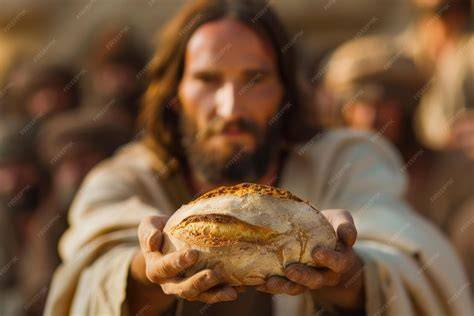
Therefore, is it any wonder that Jesus referred to Himself as the “bread of life”! In the range of 10-35 scriptures where “I am” statements are recorded, this one about being the very daily sustenance that people need stands alone with great power and assurance that Jesus is everything we need to survive life’s circumstances.

“I am the bread of life” is a statement made by Jesus in the Bible, specifically in John 6:35, where he expresses that He provides spiritual nourishment and fulfillment,  promising that those who come to him will never hunger or thirst spiritually. This phrase emphasizes the idea that true satisfaction and meaning in life come from a relationship with Him.

Too often, I think people–including myself–have fallen in the trap of looking to what the world offers in order to satisfy empty hearts…jobs and careers, social standing, measure of our wealth, leaning on the opinions of others for value…these cravings CAN be satisfied in this latter list but they run contrary to Jesus’s own words, especially for those who profess to be in relationship with Him.

I think Jesus described Himself as “the bread of life” to those who walked with him, who followed him from village to village, mountain tops to the shorelines of the Sea of Galilee, because the picture of being able to fill up a person’s hungry belly and spirit connected with the crowds. Poverty and hardships were prominent in Jewish families living under Roman rule and conditions. Life was hard. Work was often back breaking. Having enough to eat was a frequent struggle. 

In the season of Lent we can dig deep into the story behind the story, to learn that in the 3 ½ years of Jesus’ ministry many of His Jewish peers were looking for a Messiah that would come and conquer Rome. To their disappointment–and ignorance–He came to establish His kingdom on earth and become the ruler of hearts and minds, not a political victor. While many missed the purpose of His coming, we can rejoice in the few who followed, listened, and became the early church of Christianity as described in the first chapter in the Book of Acts.

As I return to my grandma’s wonderful bread making days, I have to smile remembering how my dad also reminisced about how “sliced bread” became an item on the store shelf near the family farm. “Oh, how we wanted to try this new thing out!”, he said.

“Really?!”, I asked. “Why”.

The answer is wrapped up in the notion that as humans we get caught up in routines, take good things for granted. In that moment of hearing about “store made bread–sliced and all–he thought this new convenience suddenly replaced the taste of homemade bread baked in a wood stove oven. And, I’m pretty sure the store version filled empty bellies, too. But did it taste the same? Were the ingredients as good as grandma used?

Likewise, the world has always–and continues– to offer things to fill our empty bellies and minds. The ingredients aren’t always the best. False religions and misinterpretation of the Bible are running rampant among mainline denominations. Progressive Christianity is on the rise, challenging sound doctrinal stances regarding God, the virgin birth, gender, the existence of heaven and hell.

When Thomas asked Jesus how he and the other disciples could know where He was going His response was “I am the way, the truth, and the life. No one comes to the Father except through me”.

Bread comes in a variety of textures and flavors. Salvation comes only one way, through Christ. This plan cannot be altered. Or sliced.

THE GOD WHO SEES

“O be careful little eyes what you see, O be careful little eyes what you see, for the Father up above is looking down in love. So, be careful little eyes what you see”.

For many of us who grew up in church this childhood song was fairly popular. Each verse gives gentle warnings for our eyes, ears, tongues, hands, feet, hearts and minds, accompanied with its own reminder that God–as our Father–is looking, able to see everything we do and say, and He does so bathed in “love”.

As a child years ago, I never questioned God’s ability to see me at all times. Most days that was a comforting assurance, others I admit fear took hold and I became worried about consequences. I found myself carrying over that kind of consequential fear to my earthly dad. Once I got to high school and some of my friends said “let’s do ___________(fill in the blank) ” or “hey, let’s skip school!” I can safely say most times my answer was a firm “No”, with a tag line “I don’t want my dad to find out”. I held my dad in very high esteem, wanting to please him with my decisions and actions. Imagining any look of disappointment on his face was enough to crush any thought of doing something to cause him to be upset or shamed by wrongful actions.

Likewise,  in the heavenly realm I have a Father who “can” see and hear everything I do. My feelings of not wanting to fail Him parallel how I felt about my dad. But do I always say “no” when temptation comes along or are my conversations bathed under His love and grace? Quite honestly, no. Yet, though my–or your–sins have consequences, there is a wonderful text that Paul wrote which gives us assurance of God’s love. Romans 8: 1-2 says: “So now there is no condemnation for those who belong to Christ Jesus. And because you belong to Him, the power of the life-giving Spirit has freed you from the power of sin that leads to death”.

There we have it! In the season of Lent we focus on the teachings of Christ and His ultimate purpose in coming to us in human flesh, that He would suffer and die on a Roman cross in payment of the sins for all the world. His death and resurrection fully satisfied following our sinful nature. Now believers follow the Spirit instead!

In the Old Testament one of God’s names is El Roi, “the God who sees”. It’s the Hebrew name given to God in the story of Hagar. Her story appears in Genesis 16 which I encourage you to read this week. Her story gives us a beautiful glimpse into God’s abundant love to see, know, and care for individuals who are overlooked, marginalized, and distressed. 

Too often I think people who are far from God only see Him as a God who is waiting to condemn or punish. I’ve met people who have said they don’t want to become a Christian because life wouldn’t be fun anymore. Both ideas fall far from God’s desires. While He DOES require repentance–turning away from sin–He offers abundant joy and freedom that is often indescribable! Living a Christian life is far from boring. It’s often described as a race.

“I have fought the good fight, I have finished the race, and I have remained faithful. And now the prize awaits me–the crown of righteousness, which the Lord, the righteous Judge, will give me on the day of His return. And the prize is not just for me but for all who eagerly look forward to His appearing.” (2 Timothy 7-8 New Living Translation)

In the midst of Lent, take heart that God sees you, no matter your circumstances.

Grab hold of His deep abiding love for you and does not want you to escape receiving freedom from your penalty of sin. He knows and cares about you, and like a gentle Father He’s waiting for you to enter the race, the beautiful journey of walking and running every step with Him seeing and cheering you on to the final prize, eternity with Him.

TASTE & SEE, GOD IS GOOD!

Often I write about how the variety of birds, chipmunks, and squirrels who visit our yard intrigue me as well as paint life lessons right before my eyes. We also seem to have our fair share of resident deer who’ve adopted our lil acre for places to sleep, munch on frozen leftover plants, or merely pass through as they make their way to neighboring homes. Oh and of course there are the rabbits we see quite frequently and most recently a pair of racoons made an appearance, startling us awake when one of them tipped over the pan of bird seed we provide on the deck. What amazes me is how all these lil creatures find things to eat whether it’s from our provision or as I said, frozen leftovers in the ground.

We’ve got two small feeders–small trays on a hook actually–that hang from our front porch. I can sit in our living room and watch birds swoop in for a quick bite, others prefer to sit and dominate the surface of the tray. Seed they managed to “splash” over the edge of the tray lands in an empty flower box that sits on the porch rail. Bare dirt waits for spring planting of flowers serving now as a catchall for the discarded seed. But, nothing goes to waste so it seems. This morning, before sitting down to write, one of our resident chipmunks was sitting in the dirt filling his cheeks with leftovers. Just how did he know he could find his next meal in that flower box?

For Christmas, we received a fancy birdfeeder that allows me via a camera and an app on my phone to “watch” who comes to enjoy the seed and cracked corn we put in that tray. Admittedly, I’m trying to attract crows because I find them utterly intriguing and although they’ve not surrendered to our persuasions just yet, we’ve enjoyed cardinals, blue jays and other small birds at the tray. Interestly enough, once the feeder was attached to our clothesline pole, it took a few weeks before our birds “found it”. Eventually their appearances became so frequent that I turned off notifications of activity from popping up on my phone, the “hits” were becoming too numerous throughout the day.

As I mentioned about two racoons coming around one late night, after hearing the pan of seed bounce off its small table, I turned on the light to see their well fed bodies, eyes looking up at me through the glass, absolutely no fear towards seeing me as well. Once again, I raised the question in my mind….”how do they know there’s something to eat on our deck? Can they smell birdseed?” I know you’re probably thinking, “well, why don’t you ‘google’ it and find out?” And, yes, I could, and perhaps I will but that’s not the point I’m chasing.

Quietly observing the actions of these birds and small creatures, all part of nature, created and put here by God points me–over and over–to how much, with great abundance and generosity, God places what I need in front of me. Psalm 34:8 says “Taste and see that the Lord is good.”

How do I or you do that? How is it possible to actually “taste” God? By comparison it’s easy to see His goodness…we have evidence of that in all of creation. Just this morning upon rising at 6:15 am as I walked to the living room with coffee, grabbing my Bible, before I turned on a light the bright moon in the western skies filled my eyes. I actually stood in the darkness of our home for a few minutes taking in the majestic view of our familiar moon. And I marveled about God.

When the sun began to make its appearance I stood in an open door to breathe in a few deep breaths of fresh cold air, gazing into the warm rays slowly making their way over the tree line behind our home and the neighbors. I never tire of the colors the rising sun paints in the sky. My eyes are grateful to “see” that indeed God is good.

Deep within my educational years I know that God placed instinct in every one of His creatures. They’ve been given all information for foraging, surviving, adjusting to each of our four seasons in Michigan. Their knowledge is truly amazing and really does provide life lessons for me, for you hopefully as well. Psalm 19: 1 declares “The heavens declare the glory of God; the skies proclaim the work of His hands.”  One need not look far to experience His glory and work, right? Right.

So, today, I’m thinking and connecting some random thoughts together…how birdseed is put out luring in beautiful birds and lil creatures to feast and be fed…how they “find” the feeders…how God has placed His Word in the form of our Bible into my hands and He waits for me to open its pages, to sit, dine, feast, and be satisfied. When I do what can I expect?

I suppose–with great purpose and putting into practice–everything that’s commanded of me…to love, serve, share the gospel message…my life will be full and satisfied and hopeful of all, “spill over” into the lives of everyone I meet, for nothing that is good of God is ever wasted.

That’s what occurred to me this morning as I watched a lil chipmunk stuff his cheeks with birdseed that spilled out of the tray above his head. He’s living out his purpose and I need to do the same, we all do!

A LIL DOG, BROWNIE

In the latter years of my grandmother’s life before becoming ill with cancer, which eventually was the cause of her death, she and Gramp lived in a modest home with ample property for berry bushes of all kinds, grape vines that lined the driveway, fruit trees in a side yard which we grandkids loved to climb, her small chicken coop and behind the house her vegetable garden. Though her long years rearing 11 children were behind her by the time they settled into the house in Otter Lake, preparing endless meals and “putting up jams and jellies” could have been replaced with other more tireless things to fill her days, she chose to continue one of the things she did best–keep filling her pantry with good food. 

Her love of family was shown through her cooking,  baking, a cookie jar that was never empty, baked goods on the washer and dryer that were tucked into one corner of her kitchen. A root cellar allowed her to keep canning and preserving the beautiful vegetables she grew in her personal garden. A variety of flowers were always in bloom when we visited on warm Sunday afternoons. 

We never saw the hours she spent doing all the cooking of big meals or the baking during the week to fill bellies every Sunday. How she did it all amazes me now, for as a little child the thought of her laboring over a hot stove never crossed my mind. I just knew in my heart of hearts that my grandma was invincible. Oh, I didn’t ignore how her hair was always twisted in a bun, wisps of hair falling over her forehead, gray streaks here and there. Behind her thick glasses were eyes that twinkled with just the right amount of naughtiness found in telling a good clean story. Her bib aprons were her signature style, worn to protect her housedress. Grandmas in the 50s and 60s didn’t wear pants. Along with her apron–used to wipe floury hands–was her constant smile. Even in her 60s by now, she seemed to have endless amounts of energy loving and caring for her very large family.

The only weakness in grandma that was apparent to anyone at first glance was her eyesight. Cataracts clouded her vision, thus the thick glasses. Not one to be kept from enjoying being outside picking all those berries, feeding chickens, and tending her garden, she made being outside part of her daily routine. Gramp became concerned about her stability as she walked on uneven ground so he brought home a little brown pup they named Brownie. Animals were always utilitarian to Gramp during their farming years. They served a purpose whether it was cows for daily milk, chickens for eggs and meat…you get the drift. If and when a dog was added into the mix it had to have purpose, and Brownie coming to live with them found  that out whether he knew it or not. His job was to walk beside Grandma and be “her eyes and ears”, to gently nudge her if he sensed any danger or the possibility of tripping on her feet. I have no recollection or proof of any training he received to fit his role, but by golly he took his job seriously and Grandma grew to love that little brown dog.

As I remember those last years for Grandma, Gramp helping to meet a need with bringing Brownie home, I’m drawn to how we can find Brownie’s qualities and servant heart in God. How often do we read in scripture that He is our gentle shepherd, guiding and protecting us as we walk through life, gently nudging wandering bodies from stepping off path’s safety. In the spiritual sense He sees the dangers that are hiding from us in dark places. He hears secret plans meant to destroy His kids, and has the ability to thwart weapons formed against us to bring harm. 

Reminiscing about my Grandma’s daily activities also drew me to think about the sovereignty of God, a fancy word we use in the church. Simply put, this word means that He has power, wisdom, authority to do anything He chooses within His creation. Another way to think about it is realizing that nothing escapes God’s eyes or ears. He sees and hears everything. Based on the plan and purpose for our lives, He may nudge with a gentle correction or allow continued choices and decisions until He intervenes or we surrender our selfish behaviors.

I love the memory of having a grandpa who loved my grandma deeply enough to bring home a lil brown pup to help her live life to her fullest though she had minor setbacks with eyesight and a tired body at times. Compare Gramp’s small gesture to the abundance of what God will do for us and there’s really no way to connect the two, yet I find these seemingly  small insignificant examples offer greater lessons and insight into God for our finding. 

God offers abundance. Love. Protection. Wisdom. Provision. Salvation. Much more. He doesn’t force anything on us, we have been given freewill. We can choose to walk our paths with no guidance or protection, risking falls and failure.

Or, we can accept what He offers  under the guidance of being a sovereign God and embrace what He dearly wants to give. 

When cancer invaded my grandma’s body it was necessary for around the clock care in a nursing home. Lil Brownie and Gramp lived by themselves for a short time until he, too, moved to live with my aunt. Brownie went to live out his last years on my uncle’s small farm. His last years were spent outside sleeping on the lawn, chasing barn cats, playing with us kids when we came to visit. He’d fulfilled his purpose, became too old and tired to chase after rabbits, but he  has remained an important reminder for me of unconditional loyalty and devotion to those who loved him.

I think we could all take a few lessons from Brownie. With heightened awareness of our surroundings we can be the eyes and ears for our loved ones, for our community.  Therefore, let’s find purpose every day and trust in the One Who though He is a gentle shepherd, is also the very One Who grants us abundant life within the boundaries of His sovereignty. 

GOD’S COMPASSION IN A DARK WORLD

Of God’s many characteristics one that stands out to me the most is His depth of compassion. Throughout the Old and New Testaments of the Bible we read about circumstances of mankind, the kind that were full of troubles, disobedience, and hardship, where God remained faithful and compassionate towards the very people making choices contrary to His commands.  We see this kind of compassion in how He responded to the Israelites under the leadership of Moses, their times of disobedience and rebellion (Exodus 34) and later in the words of Isaiah the Prophet, (Isaiah 49: 15)

Our English definition for the word compassion is a “deep awareness of the suffering of another by the wish to relieve it. In compassion, looking at the Hebrew word racham it’s expanded to a “sense of deep tender love akin to a mother has for her child. In the New Testament we find the Greek word oiktirmos which is defined as emphasizing mercy and pity. 

I was very fortunate to have a dad who truly displayed God’s character of compassion. My dad had his moments of misguided pride, however, over all he was humble, kind, generous, and importantly to me–slow to anger. As a mouthy rebellious teen I needed his ability to remain calm and reel me in when my emotions took control of my own displaced anger and wanting things my way. How he was able to remain calm, not raise his voice at me in heated conversations remains a mystery to me.

Another mystery I’m constantly trying to solve is how long God will continue to grant patience and withhold His anger from the depths of evil that lives in pockets around our world. We have reports of Christians being slaughtered in Nigeria, over 30,000 Iranians killed because of their protests, human trafficking being at the highest level in the United States compared to other countries, especially for sexual exploitation. That fact alone sickens me. The top five countries whose population engage in porography use are: United States, United Kingdom, Germany, Japan, Brazil.  In the US alone this industry  has amassed $13 billion annually (source: worldmetrics.org) And now, across the United States we are witnessing increased opposition to authority, tension between our party system, senseless killing in the streets and at our places of schools, business, or entertainment. So, I ask, “where has our compassion for each other gone? And again, “God, how long will You tolerate our levels of evil…when will Your compassion give way to justice for the sins we have committed?”

In his gospel Matthew wrote about a “need for workers”. We read: “Jesus traveled through all the towns and villages of that area, teaching in the synagogues and announcing the Good News about the Kingdom. And He healed every kind of disease and illness. When He saw the crowds, He had compassion on them because they were confused and helpless, like sheep without a shepherd. He said to His disciples, ‘The harvest is great, but the workers are few. So pray to the Lord who is in charge of the harvest; ask him to send more workers into his fields”.

A key take away from these verses is how Jesus reacted to the crowds and why. He saw their confusion and being helpless. This is during a time in His ministry where He’s been traveling, He’s in one area and this is what He observes. As the second person of the trinity we know He ascended into heaven to rejoin the Father and is now seated on His throne. Together–with omniscient power they have universal knowledge of all things along with all seeing. O how the sins of our world must be grieving God. Is there any doubt we need His compassion and mercy even when our evidence of disobedience, rebellion, and hatred for others deserves different? Are the populations of our world still living in confusion and helplessness?

 Even in my own doubts, my own frustrations, my own failings, deep down I know of God’s love, compassion, and mercy because He has pardoned and overlooked those things I’ve brought to Him in confession. Those things confessed to Him are forgiven and wiped clean from my sinful plate. I know that what He has done and continues to do for me is something He can and will do for everyone who comes to Him with a sincere repentful heart.

Our churches worldwide are in the season of Lent, those weeks leading up to remembering why Jesus came to us as a human, yet fully God. A man of sorrows who took ALL sin on His shoulders to pay a debt not one of us could possibly do on our own.

That sacrifice came with great cost, tremendous pain, and depth of compassion and love I won’t fully comprehend until I join Him in heaven. Until then, I will remain aware that even when I cannot comprehend how we treat one another at times here and abroad, I have a God that sees everything and remains on His throne watching and waiting to intervene in ways only He can create.

MERCY, GOD’S PROVIDENCIAL GUIDANCE

Last week I wrote about God’s creative work, that everything He crafted by divine inspiration was declared as “good” and finally “very good” when He had finished, looking and admiring from wherever He dwells among us. This week I want to focus–very briefly–on another attribute of God, mercy.

Webster’s definition of mercy is compassion, leniency, or restraint (as in imposing punishment). In Biblical terms mercy is defined as divine protection, judgement or identity. It would take a fair amount of time and study to dig deep to unpack the Hebrew word for mercy which is racham.  Strong’s Concordance defines it as related to the word used for the ‘womb’, deep compassion and protective love. Is it fair to say that the Hebrew word gives us a very different comprehension of the word “mercy” as compared to our English interpretation? I think so.

To support how deep and protective God’s love is compared to our human abilities, we need to look no farther for evidence than what scripture shows. The first person to be granted mercy from God was Cain. Those familiar with the story know that Cain became angry at his brother Abel and killed him, actually murdered, as he gave his actions forethought, carrying them through to the end. One would think–especially when the 10 commandments are given many years later to the Israelites–that God would have served quick justice upon Cain and punished him with the death penalty. But, no. God granted Cain mercy, placing two things on the remainder of his life. First, God spoke a curse that “any one who should slay Cain, would receive a sevenfold punishment. (Genesis 4: 15)

Secondly, God placed a “mark” on Cain as a warning to anyone who might try to kill him. What exactly was the mark? Scholars don’t have a definitive answer whether it was actually a physical one or a symbolic one.

Another time in the history of God’s people where a “mark” of protection appears is in Exodus when God instructed the Israelites to mark their doorposts with lamb’s blood. When He sent a final judgement against Pharaoh of Egypt, carrying through with His warning that “every firstborn whether human or animal” would be put to death, this blood mark showed the Angel who to passover, who to spare.

Another time we read about a “mark” appears in Revelation. There are actually two different “marks” described in this book. One will be given–required–by the antichrist as a means to control people, show allegiance to him. The second “mark” will be from God, described more as a “sealing of protection” on the foreheads of His servants.

Hmmm. All the way back to Genesis we see a “mark” placed on Cain’s forehead. Fast forward to a future time period as described in Revelation where God’s “mark” will be placed on numerous foreheads. Do you think this is coincidental? I dare say not at all.

When you–or I–place our complete trust and faith in God, the creator of all, we become His children and rightful heirs of everything He desires and grants us. We learned in the creation account that we are part of His “very good” work and now we see that even when our own sin or those committed against us, mercy can be replaced by harsh punishment. This kind of relationship embodies God’s very nature as a deeply compassionate and kind of Father to His children who has an indescribable protective love!

If Cain were alive today, committing his act of murder, he’d face prosecution with a judge and jury in the room. His defense attorney is God. Both sides present their case and the jury has to decide Cain’s fate. Is he guilty? If so, what is his punishment? Will he face life in prison or be placed on death row? Thankfully, God is His defense attorney and steps in to give the verdict. Cain’s life is spared. There’s no prison time, no death sentence. In fact, there’s judgement against anyone who would try to take him out. That’s mercy in action, the kind that’s hard to comprehend perhaps. Maybe it doesn’t sound fair. 

Remember, God isn’t fair. In addition to being extremely merciful He is just.  He’s the creator of life and death. He set rules in place. He is the one who has authority to give or withhold “mercy”. I’ll take His level of protective love any day over that the world attempts to dispense. And, it’s my prayer for anyone reading this today, that you will strongly consider coming into relationship with God by accepting His ultimate plan of mercy…His plan of salvation for all mankind through the sacrifice of His Son, Jesus Christ.

Now may be a good time to go read John 3: 16. But don’t merely read this one verse. Read the ones that come before and after, too. 

ALL THINGS GOOD

I can still see her bright smiling face. The year was 1987 and I had been hospitalized for observations with my high risk pregnancy. A routine glucose test in my sixth month rewarded me with almost a week under scrutiny to determine my medical plan to keep my levels in healthy range. That’s when I met her, an older black woman who cleaned my room. She was very meticulous and everything I could observe about her caused me to realize she truly loved her work, which to me–a mere onlooker–automatically caused me to wonder if after a long day cleaning hospital rooms, did it wear her out? Her answer, wrapped in that beautiful smile revealing bright teeth that accompanied the glow on her face, said it all. 

“Oh, no, quite the opposite. I get SO much satisfaction when I clean a room. I lean back on my mop and say to myself ‘my, my, my, aint that purty?’ 

I’m ashamed I don’t remember her name, but as I said, I’ll never forget her smile, her pride in being purposeful and joyful as she went about her duties with not merely my room, but several others, too. And she did it every day, and judging by her age, for a good stretch of years.

Purpose. I wrote about that a few weeks ago and I entertained a thought to revisit this word. I was drawn to Genesis Chapter 1 which gives us the account of creation. It doesn’t take long to read this chapter which records God’s work, taking six days to form everything we see, touch, and smell–and those things beyond like far away galaxies! In addition God gave a command on the fifth day for all creatures in the sea and birds of the air to be fruitful and multiply. Later, this same command is given to Adam and Eve–after being blessed by Him! Purpose.

Upon completion each of those six days God declared that “it was good”. Yet, included in His kind of leaning back and looking over everything He had accomplished He emphasized that His work was “VERY good”. 

A bit of digging taught me–teaches all of us–that the Hebrew word for “good” is tov. It means beautiful, functional, harmonious, and beneficial. EACH part of creation fulfilled its purpose. In the Hebrew which was expanded by Him saying His work was “very good” –tov mo’ed–we learn that what He had made was completion and perfection of an entire interrelated system. Wrap your mind around that for a quick moment.

In Chapter 2 of Genesis we read the account of man’s creation, how God gave Adam purpose by having him work the garden. He got to name ALL the creatures on earth! It’s here also we see God saying “it’s not good for man to be alone”. Thus, Eve is formed from Adam’s rib. Marriage between a man and a woman is established by God, and their purpose is to be “fruitful and increase in number” (verse 28) Purpose.

Sadly, everything that God called “good” or “very good” has come under attack due to the sinful nature of man. Admittedly, there’s not enough room in one article to articulate the destruction and eroding of God’s beautiful beginning in Eden, arriving to our world as we know it today. Man has done a good job of counteracting everything to no longer be 100% beautiful, functional, harmonious, or beneficial. Schemes and selfish motives have robbed us of the interracial system that God put in place for us until sin entered through Adam and Eve. But God!

Nothing comes to God as a surprise or a declaration of “whoa, I didn’t see that coming!” Because He is all knowing He had a plan when things fell apart. There’s no real answer for how long between Adam and Eve being placed in the garden before satan came to have a chat, eventually leading them into darkness. Was it 10 days? A 100? Was it 100 years? What answer does matter is that Jesus and a plan of redeeming us was already in place. I believe that God–as a triune God–Father, Son and Holy Spirit wrote that plan before verse one in Chapter 1…’In the beginning….”

Purpose. Today,  and anytime for that matter, take a good look around you. Everything you see, touch, and smell was created. It all has purpose. It all was called “good” thousands of years ago. Six days of work  was called “very good” and you, me, all of mankind is included in that declaration! Like the wonderful woman who cleaned my hospital room we, too, can lean back now and declare to God regarding what we observe and say “my, my, my, ain’t that purty?”  And good.